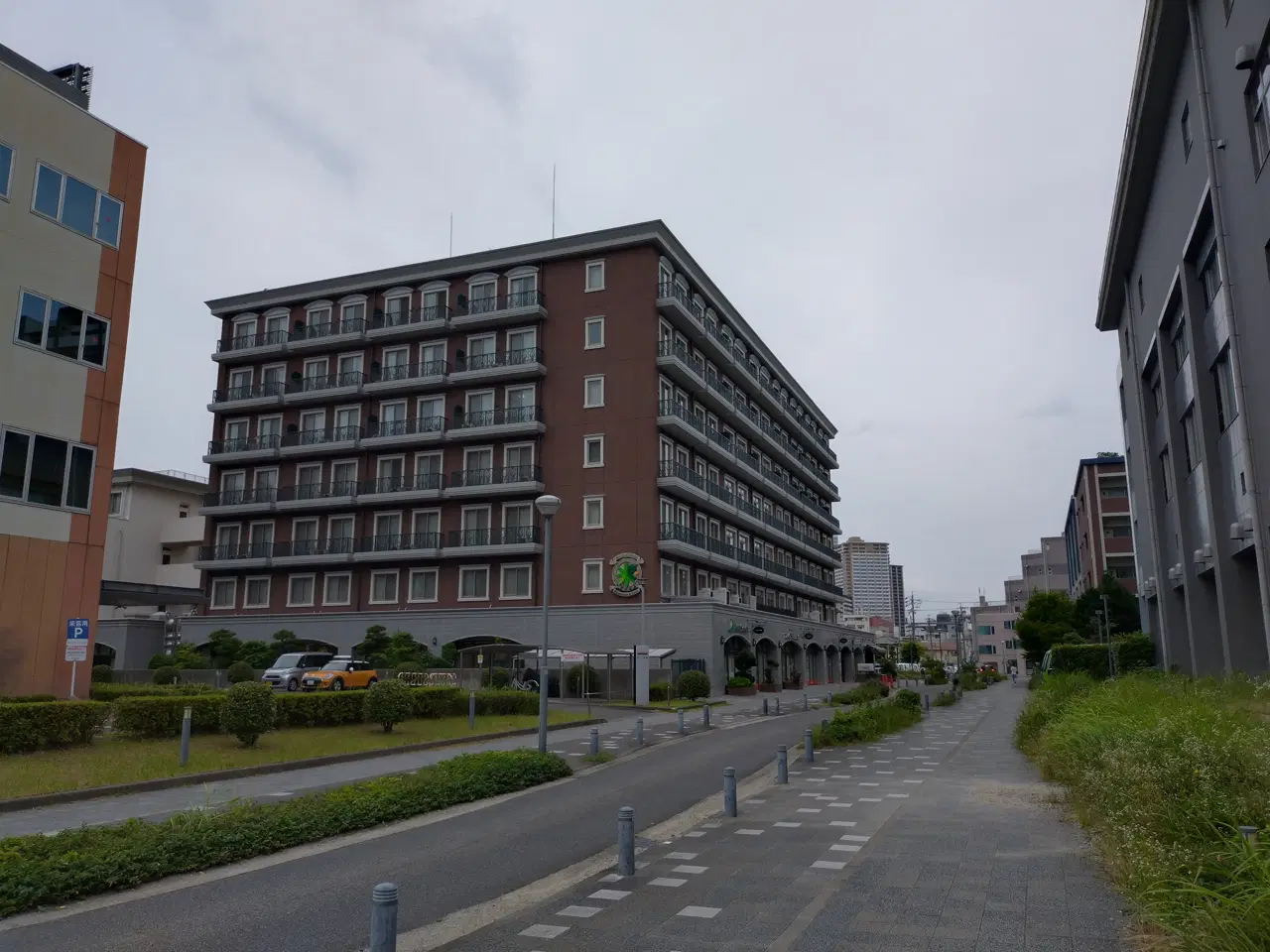
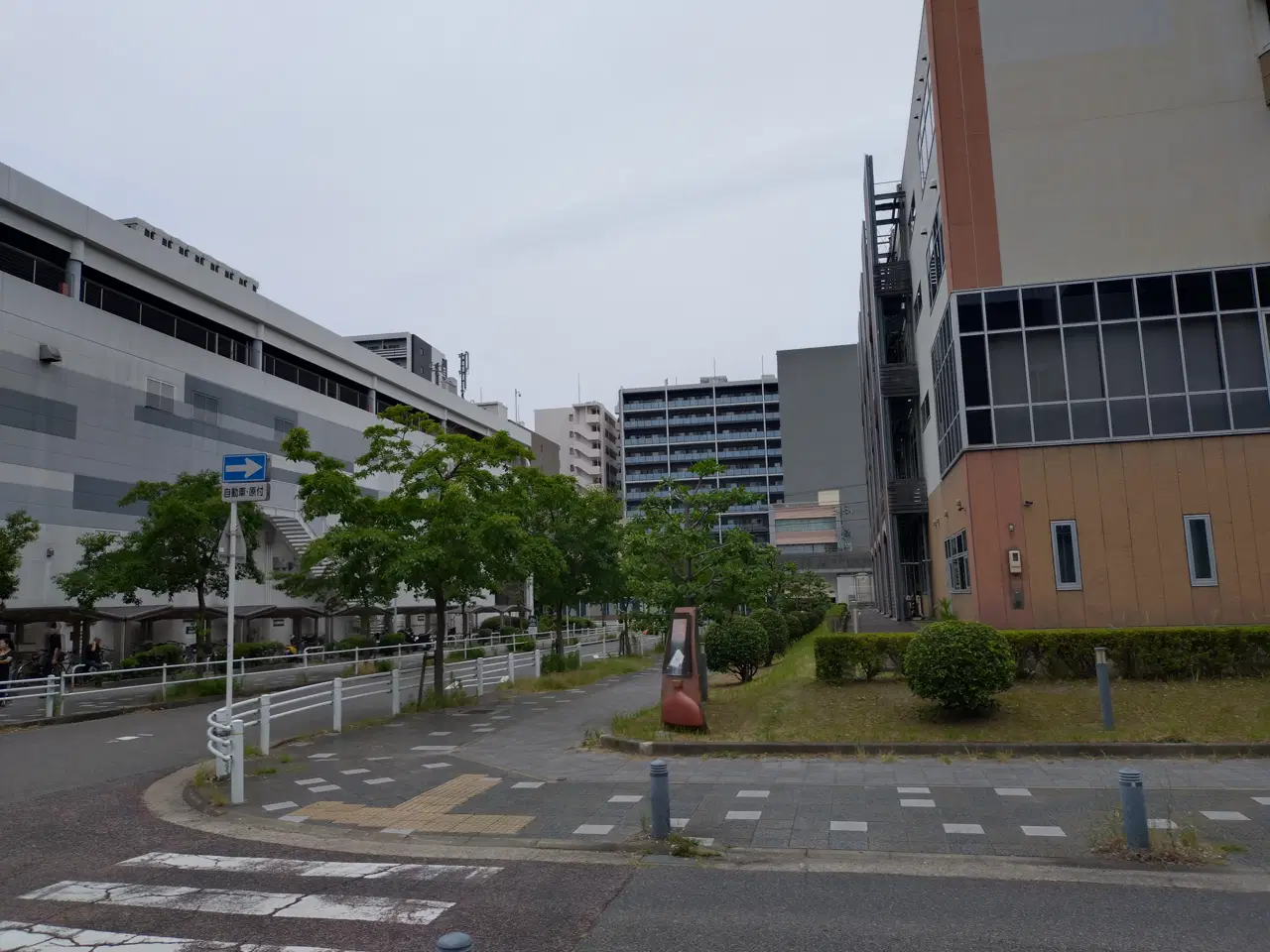
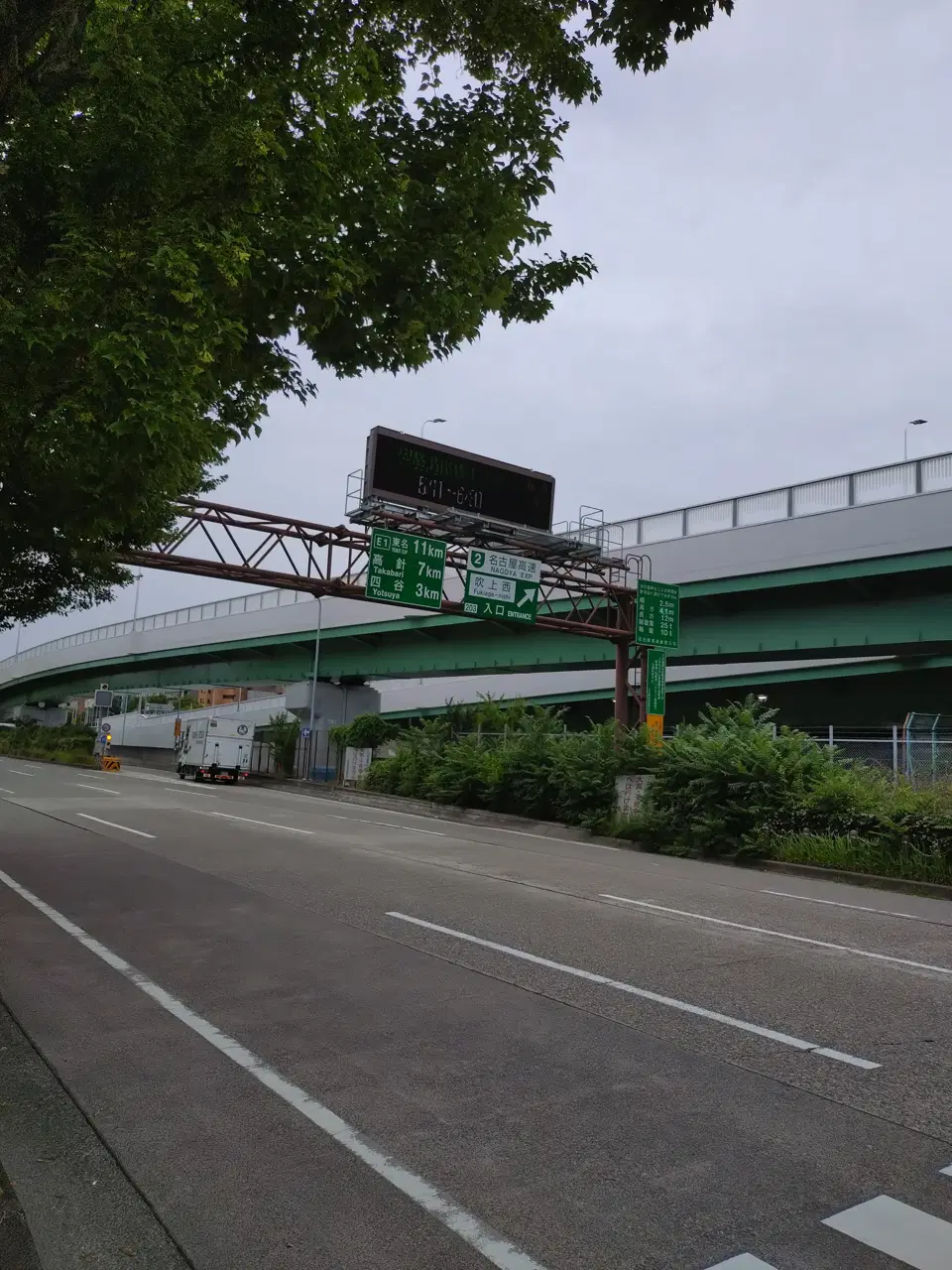
Weather: overcast, pleasant · Sleep quality: excellent · Meals: Wakashachiya udon mini set, onigiri · Music: Code 64
Today is my birthday! And there couldn’t be a better place for it. True, I miss my parents and my sister, but there’ll be a chance to make up for all that. A pity they can’t come, and can’t bring my dog along. They’d love this place.
And let me say something else. The past months were very rough on me. In recent weeks there were times I regularly slept four hours a night. A huge amount of teaching and research administration landed on me. A lot needs to change back home; I need to bring back a little of what I’m experiencing and can think through here. My poor student/colleague, too — yesterday she messaged me perfectly normally, and my first thought was “leave me alone, it’s midnight.” Then I realised it was one of my favourite students, one of — if not the — best-performing ones. In the end we chatted in a completely warm, friendly way: lack of sleep brings out the devil in a person.
It actually feels good to have a day when I do essentially nothing of substance. Today I’ll probably just submit the SMC grant for my supervisor’s sign-off (well: I’ll try), run the benchmark for the Nature paper in the background, and maybe take a loop to Wakashachiya for some curry udon. Maybe I needn’t push beyond that today. And while I’m at it, I’ll actually finish one of the SMC papers, because I’m starting to feel awkward that I’ve been writing about it for days and still haven’t submitted.
And speaking of the Nature paper: I talked with my boss about it just last night. Since I was up at 2 a.m. (19:00 back home), we discussed this too, quickly. He likes it, of course, but I have to admit there are a few too few figures in it.
Also, a new video of Radics Peti’s came out, from one of his live events. I like the guy; he brings me back a little to that Hungarian folk mood I grew up so steeped in and became a part of. Anyone who knows me knows I’m not exactly the embodiment of an English lord and the measured, put-on speech of the salons. That said, I admit my speaking style and tone have calmed a lot here in Japan. The edge and the bite haven’t vanished, but they’ve noticeably become more controlled. OK, I confess I’ve already cursed colourfully here too — for instance when I wanted to buy orange juice and got only soda water, or when I boarded at the wrong bus stop.
Lunch at Wakashachiya
For lunch I decided to go to the Wakashachiya restaurant, which has genuinely become my favourite. This time there was an older lady at the till, and I managed to exchange a few sentences with her calmly but fairly warmly. I’m starting to be more direct and confident in Japanese, even if I still speak kitchen-table language. Somehow I noticed that if I modestly mention I’m still learning, people are more patient with me.
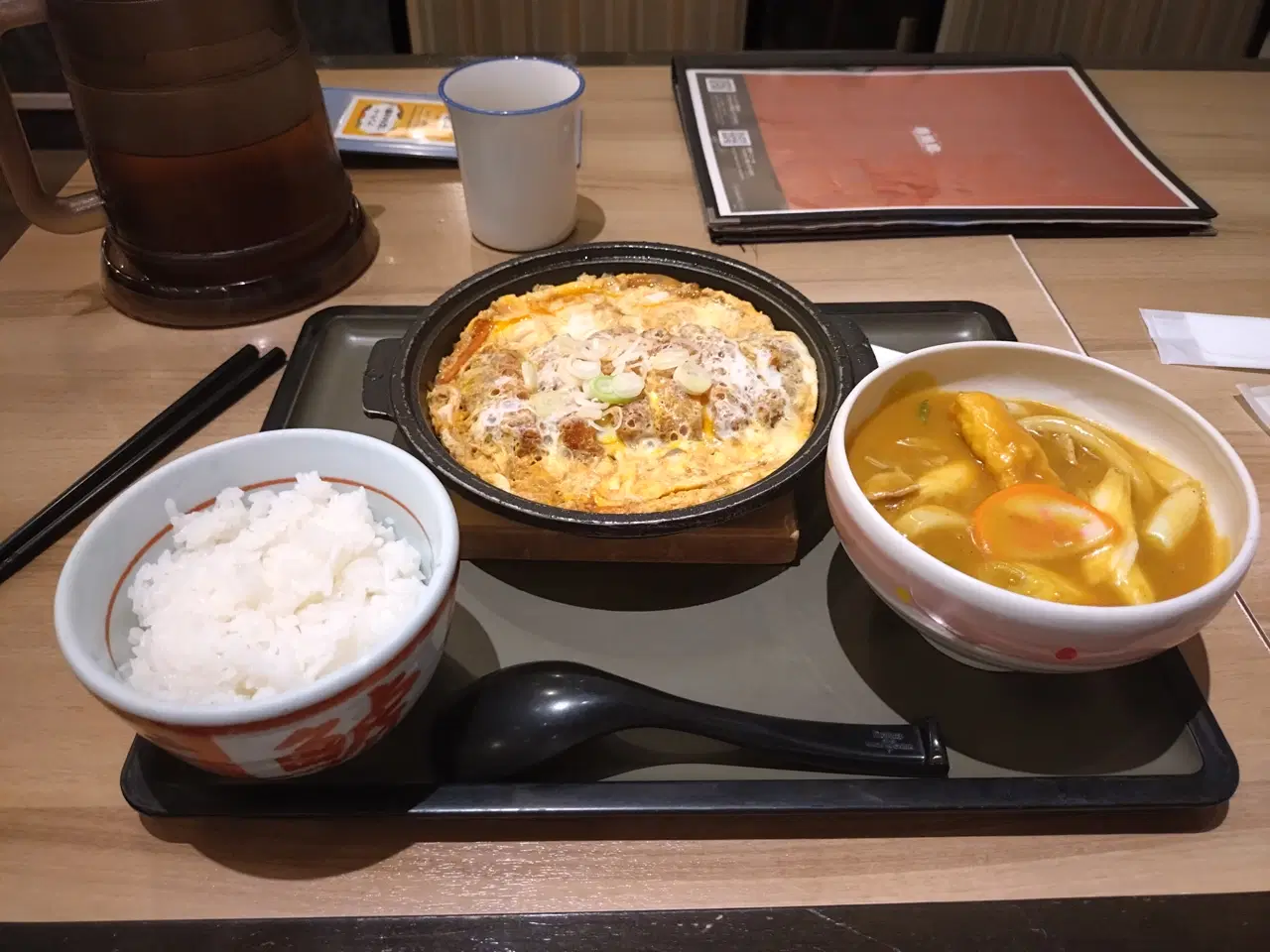
But what did I eat? A mini set, katsu-tsuba, with udon noodles and rice. When the lady brought the food and asked if I’d like anything else, I just smiled and remarked that this is already quite big — at which she gave a kind laugh too. Because, no denying it, it really was a big and filling dish.
If I wanted to translate it into Hungarian (and I can!): a breaded pork cutlet in an onion omelette, with a little rice and noodles, soaked in curry sauce. It came out piping hot, so I didn’t start with the udon but with a bit of the rice, then the cutlet. It was very mouthwatering; I loved every bite (and I’m not just writing this because maybe someone from there will read this blog one day — even if the chance of that is near zero)! It was a bit like old childhood memories, now blended with Japanese cuisine.
So I shovelled it down, and it really filled me up. When I paid, I chatted a little with the cashier, praising the food (the old lady was alone now). I said that tonkatsu exists in Hungary too, which is why I enjoyed this so much. From there came the conversation: how long I’ve been here, how long I’m staying, and that my Japanese is very good (jōzu desu). Of course I’m proud when my Japanese is praised, and I’m always glad to hear it — but I also know there’s still plenty to improve. So we parted in good spirits!
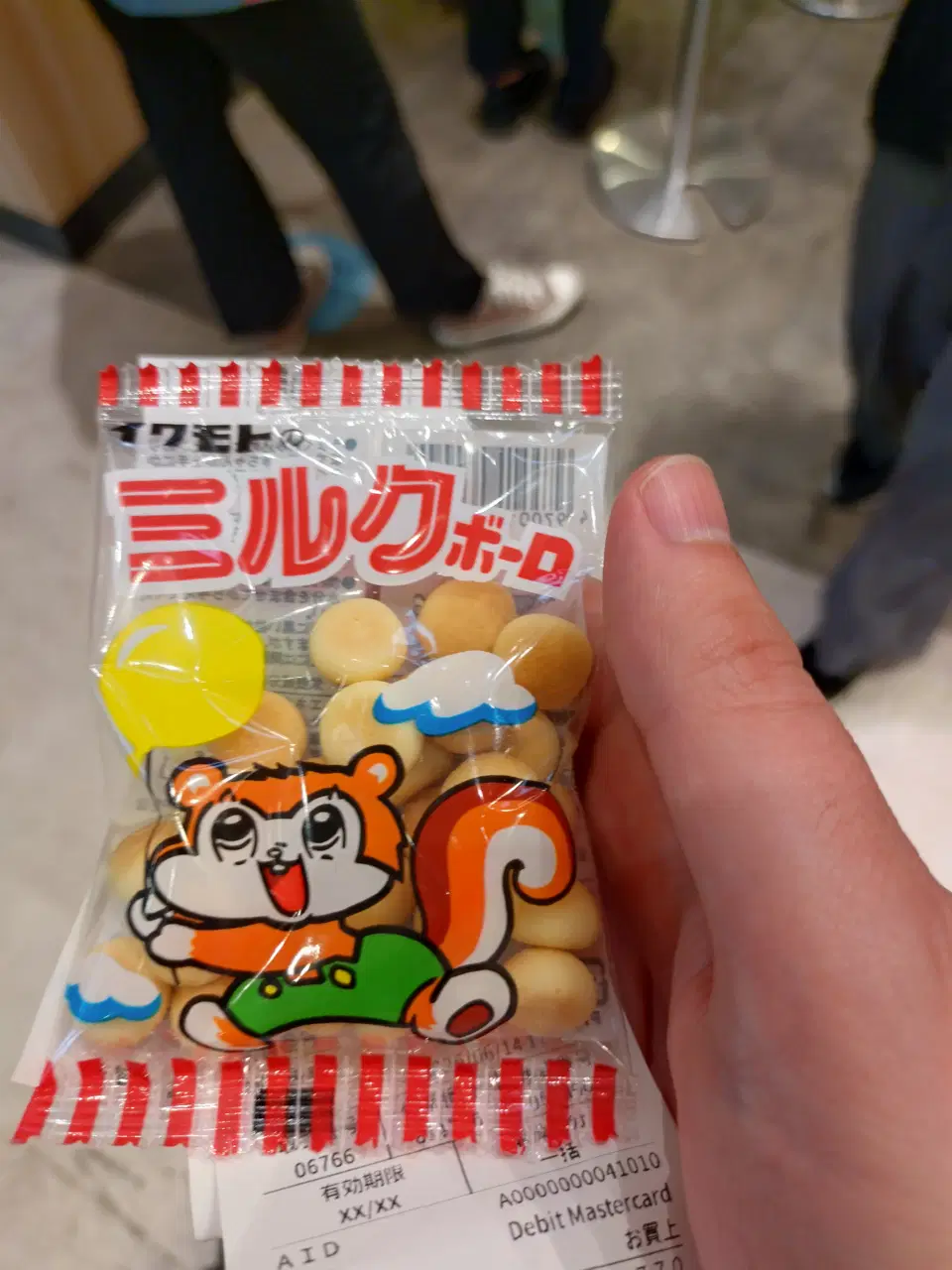
After that, on my way out I stopped at Gongcha for a tea. On the way there was a little game with all sorts of things: I won a small sweet! I’ll take this home for my sister instead. I should have signed something here, entered a prize draw, but when they learned I’ll be here for a month (I said I’m a visiting researcher at Nagoya Institute of Technology), they just gave me the whole thing as a gift.
At Gongcha, nothing really worth mentioning happened. I surprised even myself with how fluently and quickly I ordered my tea! Once that was done and the server stabbed the straw into the tea (I even showed them, go ahead and drive it in with some force, at which they laughed), I moved on. The aloe-vera, brown-sugar oolong tea is officially my favourite.
Everyday aesthetics in Nagoya
Over the course of this blog I’ll never gush about how beautiful Japanese girls are, and I’ll write about anyone’s appearance only in general terms. This isn’t the kind of blog where I describe looks in detail, like Balzac or Jókai — to the point of knowing the characters’ stomach contents.
That said, I have a general observation. In Nagoya it’s striking how tidy and aesthetically pleasing people’s appearance is, especially the women’s. Not particularly short — medium height even by Hungarian standards — black- or brown-haired, and generally slim. They wear completely everyday clothes (a light tee, plain jeans). In general one can say they’re very clean and put-together — as if the environment expects this of everyone.
What especially stayed with me is the frequency and careful arrangement of long hair. On many women you see hair nicely tied up, braided, or simply very well-kept. As a Hungarian this strikes me as oddly familiar, because we too have a strong folk memory of long, braided hair. I don’t want to manufacture a grand cultural-historical parallel out of this, but the visual echo is there for me. I like that in Nagoya so much is modern and everyday, yet it’s as if some traditional orderliness has remained in it.
I wouldn’t write about faces in detail either, because it would be easy to slip into clumsy generalisation. But as an impression I can perhaps note that in the women I’ve seen in Nagoya I often perceive a softer yet distinct overall impression: finer facial lines, restrained expression, well-kept skin, little loud makeup, a calmer gaze. No single detail dominates; rather the whole appearance comes together into something quiet, proportionate, pleasant.
I don’t want to write my everyday Japanese impressions in a language as if every sentence first had to pass through a legal and reputational filter. This is a travel diary: personal, limited, impressionistic. Not an ethnographic study, and not an indictment.
A small unpleasant situation
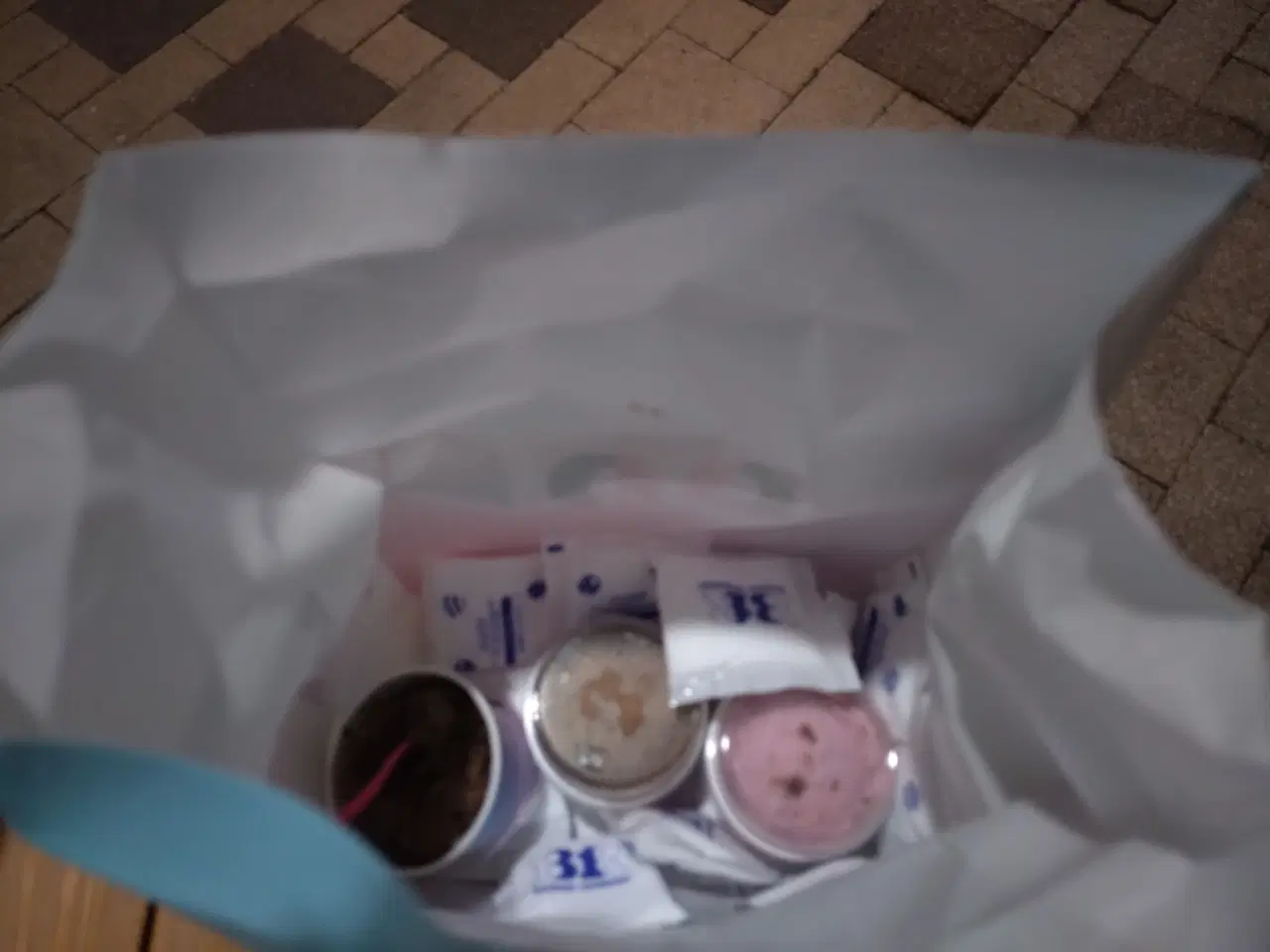
I set out a bit late in the evening, and there was a lot I could no longer manage to eat. But I bought a portion of onigiri at a little shop. After that, ice cream at the nearby Baskin & Robbins.
Here I came up against the fact that, once I navigate at a basic level, the harder questions come too. And here I realised how little I still understand, and how much I still have to learn in Japanese. They only asked how close I live — how much ice to pack with the ice cream — and I said five minutes. I need to be more precise and know more of the language. Of course I felt awkward, but I said I’m still learning, and sorry; the cashier said not to worry, it’s fine like this.
But you ask: ice in the bag? Of course! If you order takeaway — as I ordered three big scoops — they add just enough ice to keep it cold until you get home. I ate two of them just outside the AEON centre: damn this sweet-loving mouth of mine. And the ice cream here is delicious, as I’ve written before! A huge selection, but this time I wasn’t in the orange-citrus world, rather the chocolate-cherry one. Delicious, of course.
I thought this sweet experience would be the fitting close to my birthday. But it soon turned out: I was to be disappointed. The main course was only just coming.
The gaijin who locked himself out
On Sunday evening I decided I’d finally be an orderly, functioning person in Japan, and take out the rubbish.
That alone doesn’t sound like much of a story, but in Japan rubbish isn’t simply rubbish. Rubbish is a category, a time, a bag, a rule, a system. PET bottle without its label, cap separate, burnable separate, non-burnable separate, paper one way, plastic another. Somehow I oddly like this. Not because I have a particularly romantic relationship with waste management, but because there’s finally a system in which things have a place. Then I went down to take out the rubbish.
In slippers. Without my key card. Without my wallet. Everything stayed in the room.
As the dormitory’s front door clicked shut behind me, I understood pretty much immediately that Japanese civilisation works — only I had ended up outside the workings.
There I stood around midnight at the International House entrance, in slippers, with no money, no card, and every possible solution ran very quickly through my head. Will anyone else come? Can I call someone? Is there a night guard? How bad would it look if a foreign researcher were trying to fiddle with the door at midnight?
I let the last one go very quickly. This isn’t the situation where you look for a creative engineering solution. This is the situation where you humbly accept that you’ve made a mistake, and ask for help.
I tried to write to the international students’ LINE group, but the system blocked my message again and again, for some reason. That was separately absurd: I’d locked myself out of the dorm, and then out of the digital social space too. Total technological solitude, in slippers.
In the end I set off toward the main gate. It wasn’t far, but in that state even that seemed like a minor expedition. Meanwhile, in my head, I was thinking about how awkward a situation this would have been in Hungary. How many kinds of grimace, condescension, “how did you manage that?”, “what are you doing here?”, “so what do we do with you now?” reactions could have come.
Here, though, I simply had to say what happened. “I live in the International House. I took out the rubbish and left my key card in my room. Everything’s inside. I can’t get in.”
The night guard helped. It didn’t turn into a big scene. It didn’t turn into a moral judgement. I didn’t have to explain my life. I didn’t have to prove I’m otherwise a competent person who just managed to lock himself out in slippers. There was a problem, there was a procedure for it, and the situation was resolved. That meant oddly a lot.
Because of course it was unpleasant. In fact, the panic stayed with me even afterwards. At a moment like that you’re frightened not only of not being able to get in, but of suddenly becoming completely at others’ mercy. No money, no card, no key, no proper shoes. Just a phone and the hope that the system won’t treat your mistake as an enemy. And here it didn’t.
This is perhaps one of the important lessons of the first week. Japan isn’t more liveable because everyone’s an angel. They’re not angels. Nor do they need to be. But in many situations the form, the role, and the procedure hold a person up. I’m a guest, I’m a resident, I made a mistake, I ask for help, they help. That’s it.
You don’t have to love each other right away. You don’t have to be friends. You don’t have to make a psychodrama out of a key card. The situation just needs to work. When I finally got back in, the first thing I did was put the key card somewhere I won’t forget it next time. At least that’s what I say now. Reality, of course, will put it to the test.
In any case, this now belongs to my first week in Japan too: I ate my first curry udon, ordered in Japanese, learned part of the rubbish logic, and locked myself out of the dorm in slippers. Japan hasn’t been foreign so far. It just sometimes holds up a very precise mirror.
Photos